
A Snake in Your Home Can Be Scary — Here’s How to Respond Safely
Finding a snake inside your home can turn an ordinary moment into instant panic.
Maybe you walk into the kitchen and notice something moving beside a cabinet. Perhaps you open the garage and discover a snake curled behind a box. Or, even more frightening, you spot one in your bedroom or bathroom.
Your first reaction might be to scream, grab a broom, chase it outside, or attempt to trap it.
But that can make the situation more dangerous.
The safest response is usually simple: stay
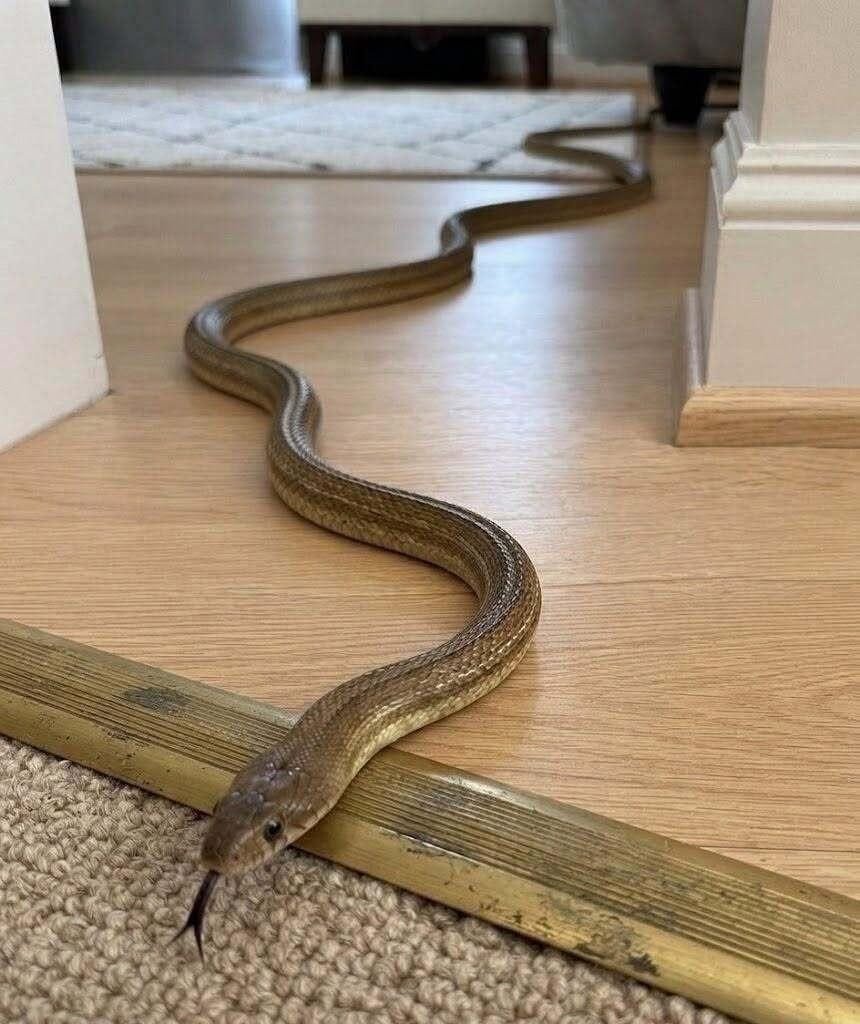
Whether the snake is harmless or potentially venomous, giving it space can significantly reduce the chances of a dangerous encounter.
Why Do Snakes Enter Homes?
Snakes generally don’t enter houses because they are searching for people to attack.
A home may simply provide something they need, including food, water, shelter, warmth, shade, cooler temperatures, or a quiet place to hide.
Garages, basements, sheds, crawl spaces, storage areas, wood piles, and gaps beneath doors can provide convenient hiding places.
Rodents may also contribute to the problem. If mice or rats are present around a property, snakes may be attracted by the potential food source.
Understanding why a snake entered your property can become important later when you begin taking steps to prevent another encounter.
First: Stay Calm and Step Away
Seeing a snake unexpectedly can trigger an immediate fear response.
That’s understandable, but sudden actions can increase the risk of a bite.
Don’t rush toward the snake, attempt to hit it, or immediately start trying to remove it.
Instead, slowly create distance.
Keep children away from the area and move dogs and cats somewhere safe. Pets can be particularly vulnerable because their natural curiosity may cause them to approach, sniff, chase, or attack a snake.
Even if the snake appears small or calm, don’t assume it’s harmless.
Never Try to Pick Up an Unknown Snake
One of the most important rules during a snake encounter is straightforward:
Don’t grab it with your hands.
A snake that appears motionless may suddenly react when it feels threatened.
Unless you can confidently identify the species, you also may not know whether it is venomous.
Trying to prove that you can handle the situation yourself simply isn’t worth the potential consequences.
Don’t Corner It
Snakes frequently behave defensively when they feel threatened or trapped.
Blocking every escape route, surrounding the snake, or repeatedly poking it with an object may make defensive behavior more likely.
If the snake is inside a room and you can safely leave without approaching it, move away.
When possible, close the door from a safe position and keep everyone else out of the room until appropriate assistance is available.
If the snake happens to be close to an exterior exit that can be opened safely without approaching it, allowing the animal an opportunity to leave may sometimes resolve the situation naturally.
But don’t attempt to herd it toward the exit with your hands, feet, broom, or another object.
What If You Can’t Identify the Snake?
Treat an unidentified snake cautiously.
Don’t rely on assumptions such as:
- “It looks harmless.”
- “It’s too small to be dangerous.”
- “It’s probably just a garden snake.”
- “It isn’t acting aggressively, so it must be safe.”
Identifying snakes can be difficult, particularly from a distance or under poor lighting.
If you can safely take a photograph without moving closer, the image may help a wildlife professional identify the species.
Your safety is more important than getting the perfect picture.
When you’re uncertain, maintain your distance and contact an appropriate local wildlife professional, animal-control service, or other qualified authority.
What If the Snake Suddenly Disappears?
This situation can be especially stressful.
You see the snake crawl behind a cabinet, beneath furniture, or into a pile of stored belongings—and suddenly you don’t know where it is.
Don’t start reaching into dark spaces trying to find it.
Avoid putting your hands beneath furniture, inside holes, behind cabinets, or into boxes where you cannot clearly see.
If possible, isolate the area and seek professional assistance.
A hidden snake may remain still when it feels secure. Disturbing its hiding place can create an unnecessary confrontation.
Keep Children and Pets Away
Children may be fascinated by an unexpected animal and want to get closer.
They shouldn’t.
Teach children a straightforward rule: if you see a snake, move away and tell an adult.
Pets should also be separated from the area.
Dogs may bark at or chase snakes, while cats may attempt to pounce on them. What begins as curiosity can quickly become a dangerous encounter.
If you believe a pet has been bitten, seek veterinary assistance promptly, particularly when a venomous species may be involved.
What You Should Never Do
Panic can encourage people to try dangerous improvised solutions.
Avoid attempting to hit or grab the snake. Don’t chase it around the house, pour household chemicals on it, use knives or other weapons, block its movement with your feet, or imitate questionable “snake removal” tricks found online.
Professional wildlife handling exists for a reason.
A seemingly simple attempt to remove a snake can become much more dangerous when an inexperienced person gets too close.
What If the Snake Is in Your Bedroom?
Finding a snake in a bedroom can be particularly frightening.
Don’t rush toward it.
Create distance and, if you can safely do so, leave the room.
Keep other people and pets outside, and close the door if doing so doesn’t require approaching the snake.
Then contact appropriate assistance.
If the snake disappears from view, don’t assume it has left the room.
What About the Bathroom?
Bathrooms can offer moisture and potential hiding spaces.
If you discover a snake there, step away.
Don’t start reaching behind the toilet, underneath cabinets, or around plumbing openings looking for it.
After the situation has been resolved, potential entry points around plumbing, doors, vents, or other openings can be inspected and appropriately sealed.
Snakes in Garages
Garages can provide especially attractive hiding places because they often contain boxes, tools, equipment, stored materials, and small gaps beneath doors.
If you find a snake in your garage, keep children and pets away and avoid searching through piles with your hands.
Once the snake has safely left or been removed, inspect the garage for potential entry points and signs of rodents.
Reduce Rodent Activity
Prevention isn’t only about snakes.
It’s also about removing things that might attract them.
Mice and rats can provide food for snakes, so reducing rodent activity may make your property less appealing.
Keep food securely stored, clean up spilled pet food, keep garbage containers closed, and address significant rodent problems appropriately.
Seal Possible Entry Points
After the immediate problem has been handled, inspect your home for potential entrances.
Pay particular attention to gaps around doors, windows, pipes, vents, utility lines, foundations, garage doors, and crawl spaces.
Weather stripping, screens, and appropriate repairs may reduce opportunities for wildlife to enter.
However, avoid sealing an opening when an animal could still be trapped inside.
Make Your Yard Less Attractive
You don’t need to remove every plant or completely redesign your property.
Instead, focus on reducing unnecessary hiding places.
Keep grass reasonably maintained and remove piles of leaves, debris, unused equipment, construction materials, and unnecessary clutter.
When practical, store firewood away from the immediate foundation.
These measures cannot guarantee that you’ll never encounter a snake, but they can make areas close to your home less attractive as hiding places.
What Should You Do If Someone Is Bitten?
A suspected snake bite should be taken seriously, particularly when the species is unknown or venomous snakes occur in your region.
Seek emergency medical attention promptly.
Move away from the snake rather than trying to capture or kill it for identification.
Avoid outdated remedies such as cutting the wound, attempting to suck out venom, applying ice directly, drinking alcohol, or using a tourniquet unless specifically directed by trained medical professionals.
Professional medical evaluation should be the priority.
Potential concerning symptoms after a suspected bite can include increasing pain, swelling, bruising, numbness, weakness, nausea, dizziness, vision changes, or difficulty breathing.
Seek urgent medical care when concerning symptoms develop.
Should You Kill the Snake?
In many situations, killing a snake isn’t necessary.
A snake that doesn’t feel trapped may attempt to retreat or hide rather than confront a person.
Depending on your location and the species involved, qualified wildlife professionals may be able to safely remove or relocate the animal.
Local laws can also govern how certain wildlife species may be handled.
What If Snakes Keep Appearing?
One snake inside or around your home doesn’t necessarily indicate a major problem.
Repeated encounters, however, may justify further investigation.
Possible contributing factors include rodents, dense vegetation, standing water, outdoor food sources, open crawl spaces, foundation gaps, poorly sealed garage doors, and nearby natural habitat.
Rather than repeatedly removing individual snakes, addressing the conditions attracting them can provide a more effective long-term solution.
Frequently Asked Questions
Why would a snake enter my house?
It may be searching for food, water, shelter, warmth, cooler conditions, or somewhere quiet to hide. Rodents and accessible openings can also make a property attractive.
Should I catch the snake myself?
Generally, no. Handling an unfamiliar snake creates unnecessary risk unless you’re properly trained.
What if I don’t know whether it’s venomous?
Maintain your distance and treat it cautiously. Contact an appropriate wildlife or animal-control professional.
What if the snake disappears?
Don’t search dark spaces with your hands. Keep people and pets away, isolate the area when possible, and seek professional assistance.
Can snakes climb?
Some species are capable climbers, so don’t automatically assume an indoor snake must remain on the floor.
Should I leave food out to lure it outside?
No. Leaving food out may attract other animals and potentially create additional problems.
Final Thoughts
Discovering a snake inside your home can be frightening, but panic often makes an already stressful situation more dangerous.
The most important response is also one of the simplest:
Stop. Step back. Keep children and pets away. Don’t touch or corner the snake.
If you aren’t certain what species you’re dealing with or cannot safely resolve the situation, contact someone trained to handle wildlife.
Once the immediate problem is over, turn your attention to prevention. Seal appropriate entry points, reduce clutter, manage rodents, maintain the areas surrounding your home, and secure doors, vents, and crawl spaces.
You don’t have to prove you’re brave by confronting a snake.
Sometimes the smartest person in the room is simply the one who stays calm.