
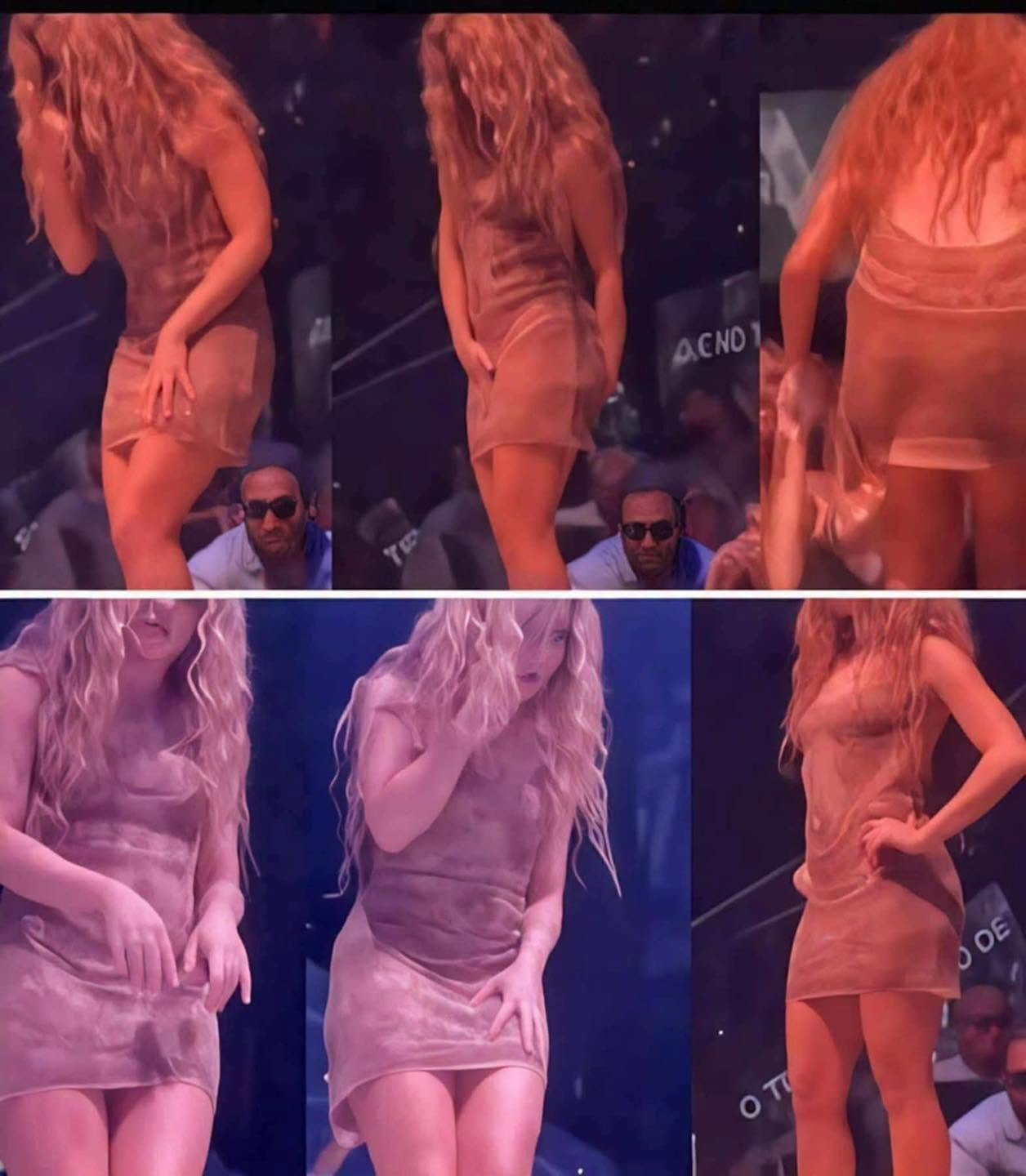
Fans Applaud Shakira’s Response to Disrespectful Behavior
The Moment Shakira Walked Off Stage: What Really Happened?
Shakira has spent decades performing under some of the brightest lights in the entertainment industry. From massive stadium concerts and award shows to television appearances and exclusive events, the Colombian superstar is accustomed to having thousands of eyes—and countless cameras—focused on her.
But one viral moment from September 2024 was very different.
During an appearance at a Miami nightclub, Shakira appeared to become uncomfortable while dancing in front of a crowd. Within moments, she adjusted the bottom of her dress, gestured toward people standing nearby and eventually stepped away from the platform.
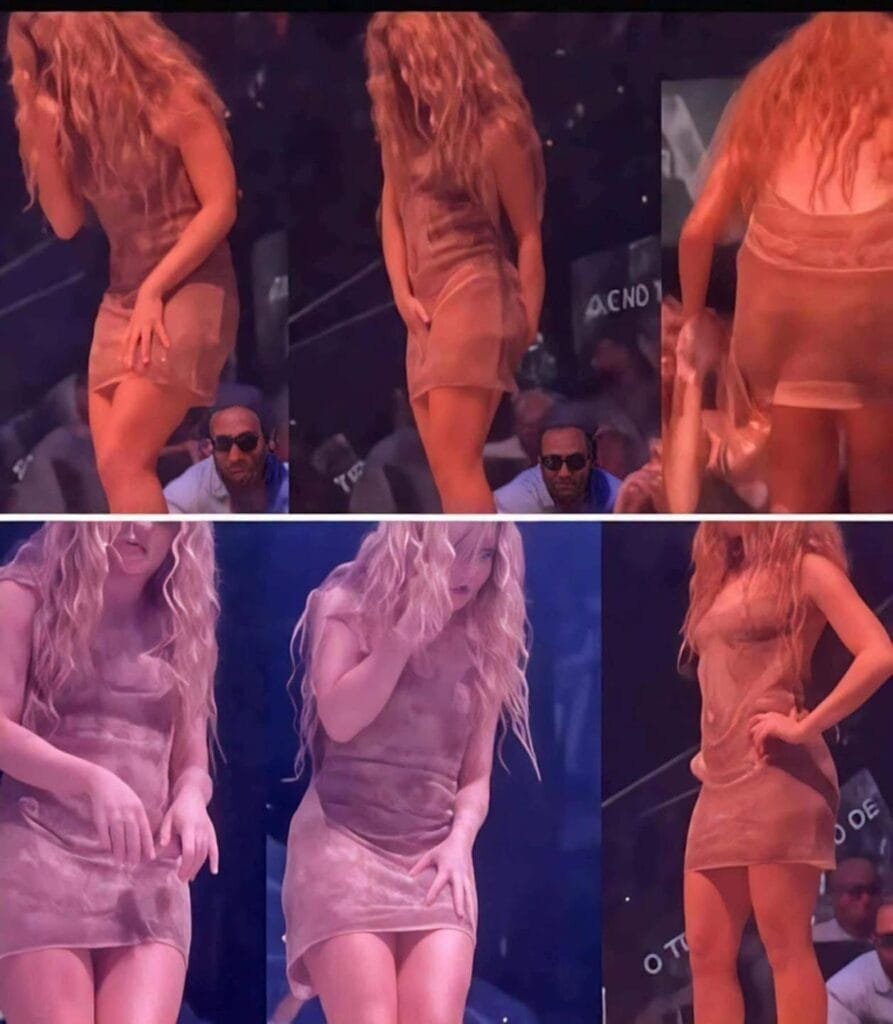
Videos of the incident quickly spread across social media. Numerous reports and online commentators alleged that someone near the stage had been attempting to record underneath her dress.
Because the widely shared clips capture only a brief portion of what happened, the precise intentions of the person involved cannot be established from the footage alone.
What was much clearer was Shakira’s reaction.
She appeared uncomfortable—and she chose to leave.
Instead of criticizing the singer for ending the moment, many fans applauded her response, arguing that celebrities have the same right as anyone else to establish boundaries when they feel their privacy or dignity is being compromised.
The incident quickly became about something much bigger than a viral celebrity video: consent, privacy, personal boundaries and what performers should—or should not—be expected to tolerate simply because they are famous.
class="wp-block-heading">An Unexpected Moment During a Miami Appearance
Shakira is known around the world for her energetic performances.
Dance has been central to her career from the beginning, and her ability to combine music and movement has become one of her most recognizable trademarks.
That is partly why the Miami incident attracted so much attention.
The singer was appearing at LIV nightclub in Miami during celebrations connected with her song “Soltera.” Footage shared online showed Shakira dancing on an elevated platform while a crowd gathered closely around her.
Initially, the atmosphere appeared celebratory.
Shakira smiled, danced and interacted with those around her.
Then something appeared to change.
In the viral footage, she could be seen looking downward toward people standing near the platform. She then pulled at the bottom of her dress, seemingly trying to keep it in place.
She continued dancing briefly before looking down again and gesturing toward someone in front of her.
Shortly afterward, she stepped away.
Online reports interpreted the sequence as Shakira reacting to someone allegedly attempting to record underneath her dress.
While a short video cannot conclusively establish another person’s intentions, Shakira’s visible discomfort became the central focus of the discussion.
Whatever she saw or believed was happening, she apparently decided she no longer wanted to remain in that position.
And she left.
The Video Quickly Goes Viral
In the age of smartphones and social media, an incident lasting only seconds can become international news within hours.
That’s exactly what happened.
Clips from the nightclub circulated rapidly across social platforms, attracting millions of views and generating widespread discussion about what had taken place.
Entertainment publications around the world subsequently reported on the footage.
But for many viewers, the most important part of the story wasn’t that Shakira stopped dancing.
It was that she appeared to recognize a boundary had potentially been crossed—and responded immediately.
Fans argued that she had every right to do so.
Being a celebrity does not mean surrendering every expectation of privacy.
Performing publicly does not mean agreeing to every possible kind of photograph or recording.
And wearing a particular outfit does not constitute permission for someone to deliberately seek invasive images.
Those distinctions became central to the public conversation surrounding the incident.
Fans Rally Behind Shakira
Much of the online reaction was sympathetic toward Shakira.
Fans praised her for refusing to continue in circumstances where she appeared to feel uncomfortable.
Instead of viewing her departure as an inconvenience to the audience, supporters saw it as an understandable assertion of a personal boundary.
One principle repeatedly emerged from the discussion:
Fame does not equal unlimited consent.
Celebrities occupy an unusual position in society.
They deliberately perform for cameras, appear before enormous audiences and often share portions of their lives publicly. Smartphones and social media have made access to public figures feel more immediate than ever before.
But being visible is not the same as giving unrestricted permission.
Someone agreeing to be photographed while performing does not necessarily consent to every possible angle, moment or type of recording.
For many people defending Shakira, that distinction was crucial.
A performer should not be expected to tolerate conduct simply because an audience wants footage of them.
If behavior would be considered invasive or disrespectful toward an ordinary person, celebrity status should not automatically make it acceptable.
Why Personal Boundaries Don’t Disappear With Fame
The incident also highlighted a larger issue surrounding modern celebrity culture.
Almost everyone carries a high-quality camera in their pocket.
At concerts, festivals, clubs and public appearances, hundreds or even thousands of smartphones can be pointed toward a performer simultaneously.
Most people are simply recording memories.
But technology has also blurred certain boundaries.
The fact that something can technically be recorded does not automatically mean it should be.
There is an important difference between filming someone performing and intentionally attempting to capture intimate or invasive footage.
For many observers, the Shakira incident became a reminder of why that distinction matters.
Public figures choose careers involving extraordinary visibility, but they remain human beings with personal boundaries.
They can decide when something makes them uncomfortable.
They can object.
And they can leave.
The same principle extends far beyond celebrities.
Whether someone is performing on a stage, dancing at a party, attending a festival or simply walking down the street, their clothing should never be interpreted as blanket permission for invasive behavior.
The Complicated Reality of Smartphones
There was a time when recording a famous performer generally required professional equipment.
Today, virtually everyone in an audience has a camera capable of capturing detailed photographs and high-resolution video.
That transformation has brought enormous benefits.
Fans can preserve memorable moments, performers can reach global audiences instantly, and extraordinary performances can spread around the world within minutes.
But there is another side to that accessibility.
The presence of a camera can sometimes make people forget that the person being recorded still has boundaries.
Just because a celebrity is standing in public doesn’t mean every possible photograph is appropriate.
Just because someone is dancing doesn’t mean they have surrendered control over how their body is viewed.
Technology may have made recording easier.
It hasn’t eliminated the importance of respect.
Shakira’s Response Was Simple—but Powerful
Part of what made the viral moment resonate was how straightforward Shakira’s apparent response seemed to be.
She didn’t need to turn the situation into an extended public confrontation.
The footage appears to show her noticing something, signaling her discomfort, adjusting her clothing and ultimately removing herself from the situation.
Sometimes establishing a boundary can be that simple.
People do not necessarily owe others a lengthy explanation before leaving an environment that makes them uncomfortable.
That message seemed to resonate with many of Shakira’s supporters.
Almost everyone has experienced a moment when another person’s behavior suddenly felt inappropriate, disrespectful or simply uncomfortable.
Deciding how to react can be difficult.
Some people confront the behavior directly.
Others seek assistance.
Some ignore it.
And sometimes the safest or most comfortable response is simply to walk away.
Shakira appeared to choose the latter.
Consent Is Not Complicated
At the heart of the discussion is a remarkably simple principle.
A person’s presence in public does not erase their right to boundaries.
Neither does fame.
Neither does clothing.
Neither does dancing.
Neither does performing.
Consent to one thing should not automatically be interpreted as consent to everything else.
A musician performing before an audience obviously expects to be seen and, in many circumstances, photographed or recorded.
But that doesn’t create unlimited permission to obtain invasive footage.
Respecting that distinction requires very little from an audience.
Enjoy the performance.
Take appropriate photographs.
Record memorable moments when permitted.
But remember that the person standing on the stage is still a person.
A Broader Lesson From a Viral Moment
Celebrity stories often disappear almost as quickly as they appear.
A clip goes viral, millions of people comment on it, and within days the internet moves on to something else.
But occasionally, a brief moment raises a question worth remembering.
Shakira’s Miami appearance did exactly that.
Whatever the full circumstances surrounding the viral footage, her apparent discomfort served as a reminder that public visibility does not eliminate personal dignity.
People are allowed to establish boundaries.
They’re allowed to object when something feels inappropriate.
And they’re allowed to remove themselves from situations where they no longer feel comfortable.
For performers, that shouldn’t change simply because an audience is watching.
Respect Shouldn’t Depend on Celebrity Status
Shakira has performed in front of enormous crowds throughout her career.
She has been photographed thousands of times and has spent much of her adult life in the public eye.
Yet none of those things mean she—or any other public figure—must accept every form of attention directed toward them.
That may ultimately explain why the nightclub video resonated with so many people.
The situation wasn’t only about Shakira.
It represented a boundary almost everyone can understand.
There is a difference between attention and intrusion.
There is a difference between watching and invading someone’s privacy.
And there is a difference between being visible and giving consent.
Shakira’s response appeared to communicate that boundary without requiring many words.
When something seemingly made her uncomfortable, she walked away.
For the fans who applauded her decision, the message was simple:
No performance is more important than a person’s right to dignity, privacy and respect.