
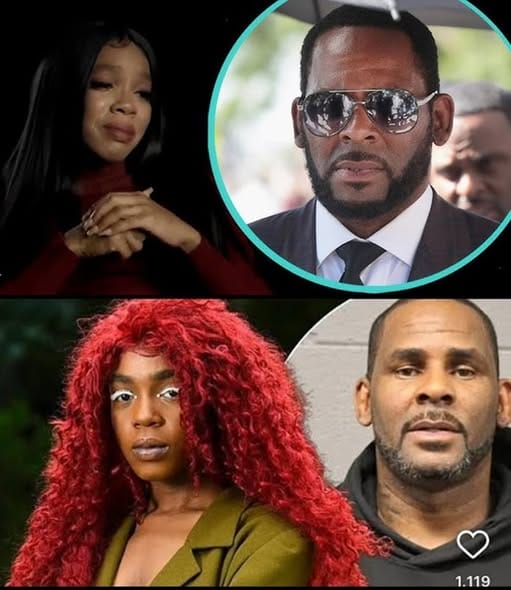
R. Kelly’s Daughter Speaks Out and Diddy’s Sons Break Their Silence
Inside the Children’s Painful Truth About Their Famous Fathers
R. Kelly’s daughter has stepped forward with heartbreaking revelations about the abuse she says she endured at the hands of her father.
Her words add a deeply personal layer to the long, public saga surrounding the disgraced R&B star, transforming headlines and court dates into the intimate story of a child growing up in fear and confusion.
At the same time, the sons of Sean “Diddy” Combs are beginning to share their own perspective on life with one of hip‑hop’s most powerful and controversial figures.
Their
Together, these voices form a larger narrative about what it means to be the children of men who built empires in music and entertainment while allegedly causing deep harm behind closed doors.
They reveal that fame and wealth do not shield a family from trauma; in some cases, they may actually make it harder to escape.
Growing Up in the Shadow of R. Kelly

For R. Kelly’s daughter, childhood was never simple.
While the world saw her father as a superstar with hit records, sold‑out tours, and a carefully crafted image, she saw another side—one defined by fear, volatility, and emotional damage.
She has described the confusion of watching people praise and adore the man she knew privately as controlling and dangerous.
As allegations of his abuse toward women and girls began to surface publicly, she was forced to confront the reality that the person the world idolized might be the same person responsible for her own emotional wounds.
In speaking out, she has emphasized how abuse is not always physical.
It can be psychological, emotional, and spiritual, leaving scars that are invisible but long‑lasting.
Growing up under constant tension, not knowing when anger might erupt, or feeling manipulated and silenced, can shape a child’s sense of self in devastating ways.
She has also acknowledged the conflict of loving a parent who has caused harm.
Children in these situations often feel torn between loyalty to family and the need to protect themselves and others.
When that parent is also a celebrity, the pressure is multiplied: millions of strangers, fans, and critics suddenly feel entitled to your pain.
By breaking her silence, she is not only telling her own truth but also standing with survivors who have been disbelieved or dismissed.
Her voice underscores a crucial reality: the impact of abuse does not end with the victim; it reverberates through families, especially children, for years.
Diddy’s Sons and the Weight of a Public Legacy

On a different but related front, Diddy’s sons are navigating their own complicated relationship with a powerful father whose name is synonymous with hip‑hop success, luxury, and influence.
From the outside, their lives might look like a dream—designer clothes, mansions, parties, and instant access to the music industry.
But behind that glamorous image lies a story filled with expectations, emotional strain, and the burden of living in the shadow of a giant.
As the public begins to see more documentary‑style content, interviews, and clips where they reflect on their experiences, a fuller picture is emerging.
They speak about a father who demanded excellence, who pushed them to be strong, ambitious, and relentless.
Yet that drive, while it opened doors, may also have come at a cost.
Children of powerful men often feel they must perform at all times—never show weakness, never disappoint, never tarnish the family brand.
In recent years, allegations and investigations surrounding Diddy have raised questions not only about his business and personal life, but also about the emotional environment in which his children were raised.
Even when they do not directly accuse him of specific acts, their tone, silence on certain issues, or carefully chosen words suggest a story more complicated than public appearances reveal.
Their emerging narratives remind us that being a celebrity’s child is not simply about fame and opportunity; it can also mean growing up in a world where image matters more than emotional truth, and where speaking out can feel dangerous or disloyal.
The Hidden Cost of Fame on Children
The stories of R. Kelly’s daughter and Diddy’s sons highlight an uncomfortable reality: the children of celebrities often carry hidden burdens that the public rarely sees.
Fame creates distance between perception and reality.
Fans see music videos, red‑carpet moments, and curated social media posts.
Children see what happens when the cameras turn off.
When a parent is accused of abuse, manipulation, or other harmful behavior, their children are caught in the crossfire.
They are expected to pick a side, defend the family, or remain silent while the world debates their parent’s character.
Many of them grow up feeling voiceless in a story that directly affects their lives.
It also becomes harder for them to process trauma in private.
Every statement, every rumor, every leaked detail becomes public property.
Therapy, healing, and honest conversations are complicated by the fear that anything they say might end up online.
The courage it takes for them to speak out cannot be overstated.
They risk backlash from fans, criticism from family, and misunderstanding from strangers who think they know the whole story just because they have followed the headlines.
Breaking the Silence and Rewriting the Narrative

By stepping forward, R. Kelly’s daughter is reclaiming her voice from a narrative that for years centered only on her father’s fame and crimes.
Her testimony reminds the world that the consequences of abuse are not abstract.
They live in the hearts and minds of real people who have to rebuild their lives long after the court cases are over.
Similarly, Diddy’s sons are slowly shifting the narrative from the myth of an untouchable mogul to the reality of a complicated father‑son relationship.
They are beginning to define themselves not just as “Diddy’s kids,” but as individuals with their own experiences, values, and boundaries.
Their stories encourage other children of powerful or abusive parents—famous or not—to recognize that their feelings are valid.
Speaking out, setting limits, or even choosing distance is not betrayal; it is survival.
As more of these young people share their perspectives, the culture around celebrity and power begins to change.
We are forced to confront uncomfortable truths: that success does not equal goodness, that talent does not erase harm, and that the children standing quietly in the background of our favorite stars’ photos may be carrying heavy, invisible pain.
Why Their Voices Matter

Listening to R. Kelly’s daughter and Diddy’s sons is about more than curiosity or gossip.
It is about acknowledging the humanity often erased in the glow of celebrity.
Their courage helps:
– Validate survivors who grew up in abusive or controlling homes.
– Challenge the blind worship of powerful entertainers.
– Push society to prioritize the safety and emotional well‑being of children over the protection of brands and legacies.
In the end, their voices remind us that truth is not always glamorous, and healing is rarely simple.
But every time a survivor speaks, the culture that once protected abusers and silenced children loses a little more of its power.
And that, more than any hit record or red‑carpet moment, might be the most important legacy of all.