
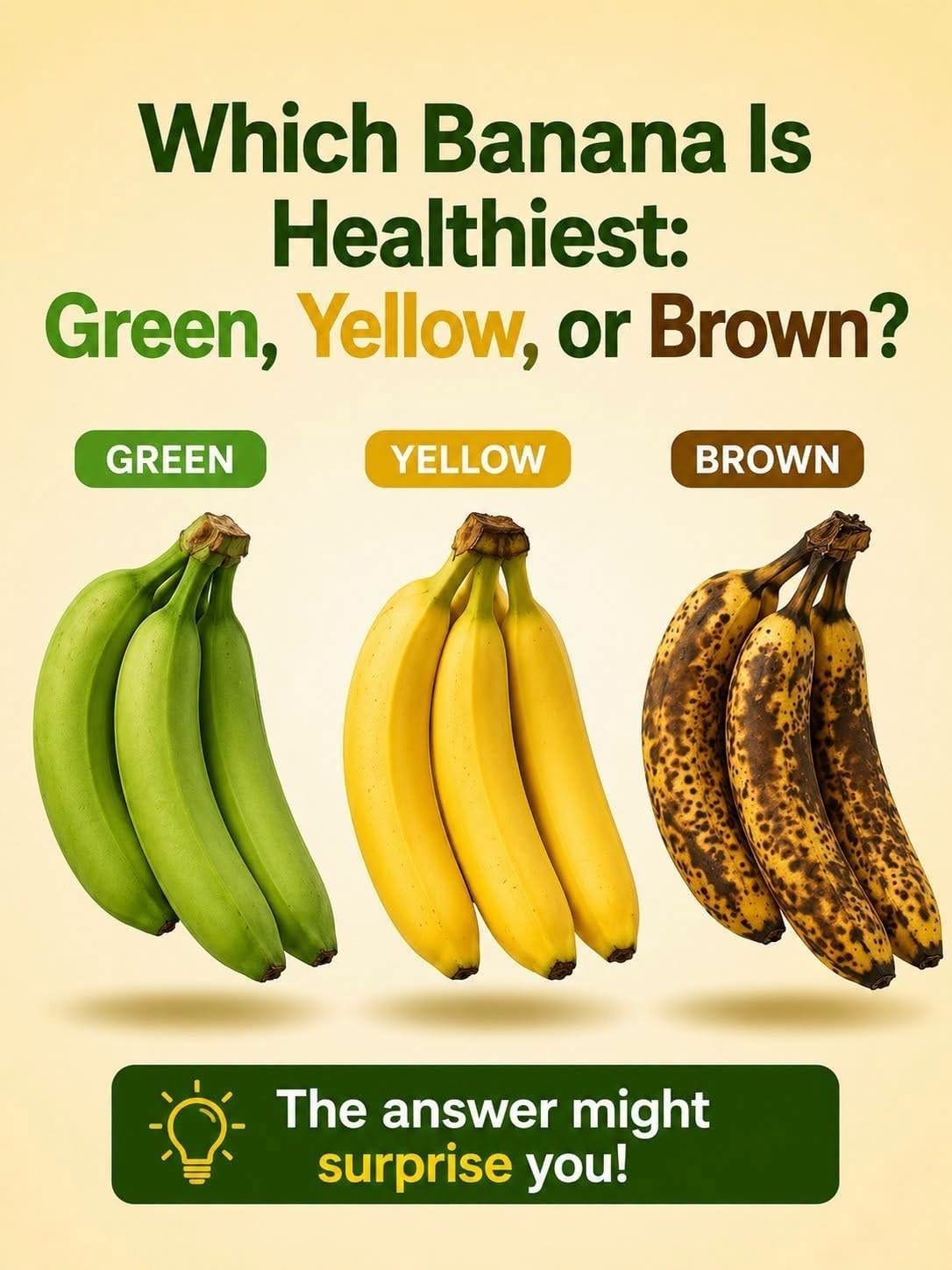
Bananas are among the most popular fruits in the world because they are affordable, convenient, naturally sweet, and rich in essential nutrients. However, their nutritional properties change as they ripen, meaning green, yellow, and brown bananas each offer different benefits.
Green bananas contain the most resistant starch, a type of carbohydrate that resists digestion in the small intestine and helps feed beneficial gut bacteria. They also contain less natural sugar than ripe bananas, making them a useful option for people seeking greater fullness and better blood sugar management.

Their firm texture and slightly bitter taste may not appeal to everyone, but green bananas can be a good choice for those looking to increase their intake of resistant starch and support digestive health.
Yellow bananas offer a balance of sweetness, fiber, and essential nutrients. As bananas ripen, much of their resistant starch converts into natural sugars, creating a softer texture and sweeter flavor. They provide readily available energy and are convenient for everyday snacks, breakfast, or a pre-workout boost.
Brown, spotty bananas are often discarded, even though they remain nutritious. As ripening continues, bananas become sweeter and softer, making them ideal for smoothies, baking, and people who prefer an easier-to-chew fruit. Changes in antioxidant compounds may also provide additional benefits, although the exact nutritional differences depend on the banana and its stage of ripeness.

Ripeness can also affect digestion and blood sugar responses. Green bananas generally digest more slowly, while ripe bananas may be digested more quickly because they contain more simple sugars. People monitoring their blood sugar can consider portion sizes and pair bananas with protein or healthy fats, such as Greek yogurt, nuts, or peanut butter.
Although bananas are generally well tolerated, some people may experience digestive discomfort or allergic reactions. Anyone who notices itching, swelling, or other unusual symptoms after eating bananas should seek appropriate medical advice.
Ultimately, there is no single healthiest banana for everyone. Green bananas are especially useful for resistant starch and fullness, yellow bananas provide a convenient balance of sweetness and nutrients, and brown bananas offer a softer texture and may contain higher levels of certain antioxidants.
The best choice depends on your preferences and nutritional goals. Rather than avoiding bananas at a particular stage, enjoy them at the ripeness that suits you best as part of a balanced diet.