
What happens after we die? It is a question people have asked for centuries, and one that continues to inspire faith, curiosity, and debate.
Many religious traditions teach that life continues beyond death. Others take a different view, leaving the question open. For some people, belief in an afterlife brings comfort when facing the uncertainty of death.
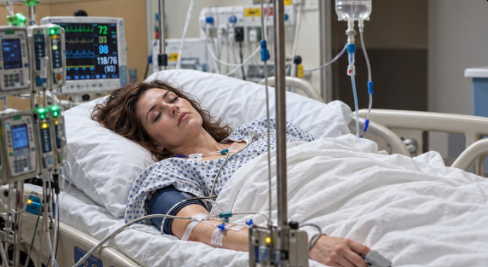
Stories of near-death experiences often draw attention because they offer deeply personal accounts of what people remember during a medical crisis. Some describe light, peaceful surroundings, or encounters with loved ones who have died. Those experiences can feel profoundly real to the people who report them, though they do not establish what happens after death.
For one 41-year-old woman named Sarah, a sudden medical emergency became an experience she would never forget.
Sarah was trying to open a container lid when she felt severe pressure in her chest. Recognizing that something was seriously wrong, she called for an ambulance.
At the hospital, doctors discovered a blocked artery and treated it. For a short time, her condition appeared to improve, and she regained consciousness.
Then her heart developed ventricular fibrillation, a dangerous rhythm that prevents it from pumping blood effectively.
The medical team rushed to resuscitate her. She had no detectable pulse, and staff performed CPR and delivered electrical shocks in an effort to restore an effective heartbeat.
In this fictionalized account, approximately 45 minutes passed before her pulse returned.
When Sarah eventually woke up and was able to speak, she described something far removed from the frantic hospital room around her.
She remembered a light.
“The only thing I remember is seeing the light and starting to walk toward it,” she said.
In her recollection, she followed a path lined with flowers. Everything around her felt peaceful. The fear and pain she associated with the hospital seemed distant.
Then she saw someone she recognized: her late stepmother.
Sarah described the encounter as warm and familiar. Her stepmother approached, took her hands, and told her she could not stay.
“It’s not your time. You don’t need to be here. We have to take you back. You still have things to go and do.”
Those words became the clearest part of Sarah’s memory.
Her next awareness was of being back in the hospital, surrounded by the people caring for her.
To Sarah, the experience carried a deeply personal meaning. She believed she had encountered someone she loved and been reminded that her life was not finished.
Her recollection leaves the larger question of the afterlife unanswered. But within her story, the message she brought back was simple: she still had a life to live.