
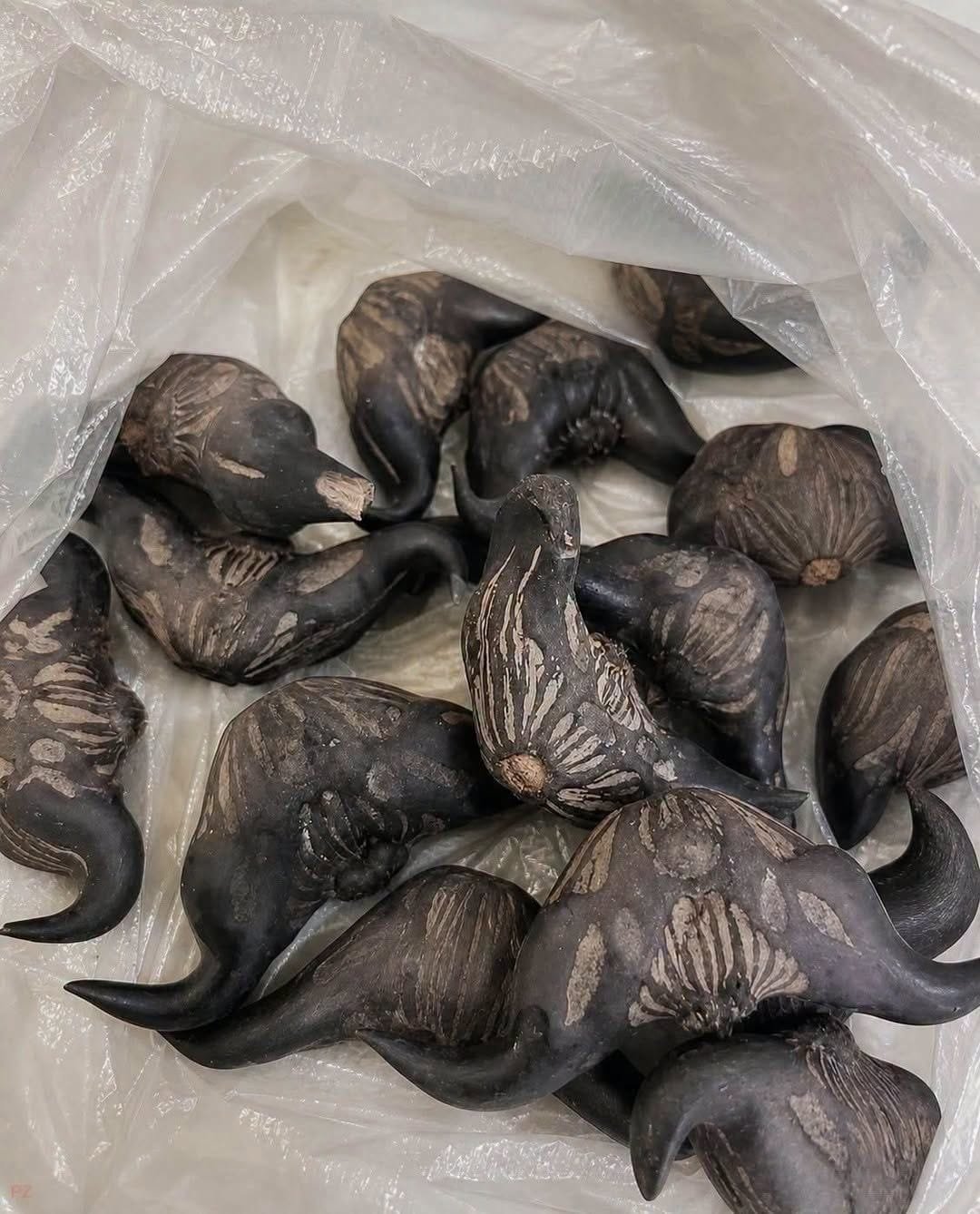
At first glance, the strange black fruits in the photograph look almost like something from another planet.
They have hard, dark shells, sharp curved horns, and irregular shapes that make them difficult to recognize as food. If someone handed you a bag full of them without explanation, you might immediately wonder: What are these, and how are you supposed to eat them?
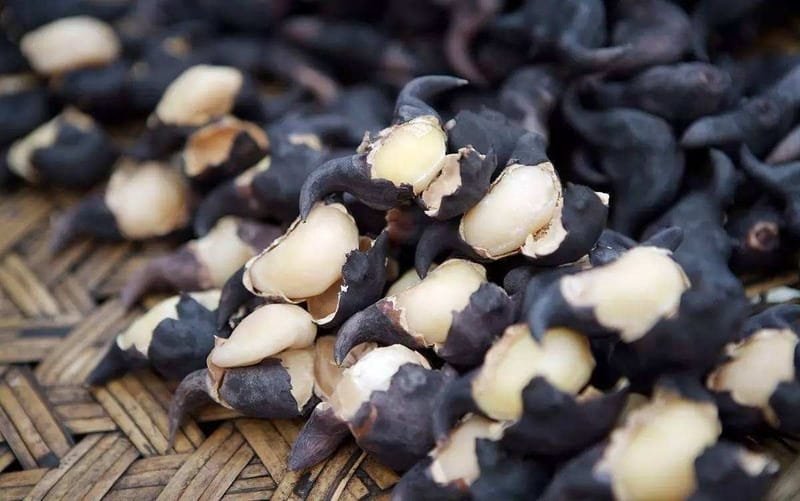
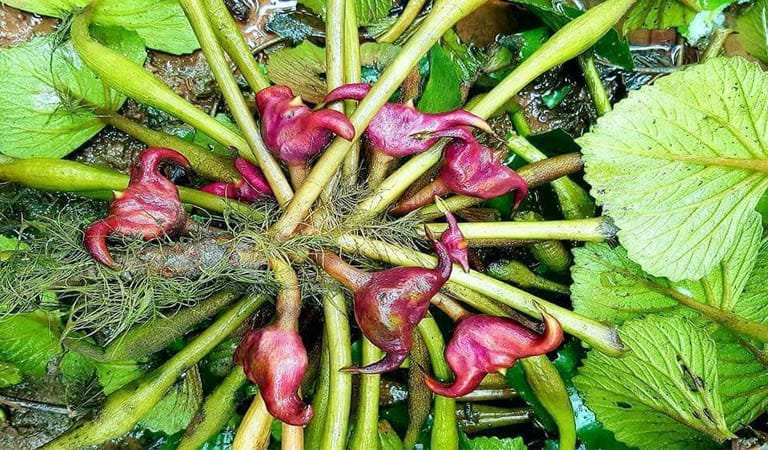
The fruits appear to be water caltrops, commonly known in different regions as water chestnuts, buffalo nuts, bat nuts, devil’s nuts, or singhara. They belong to the genus Trapa and grow in freshwater environments such as ponds, lakes, and slow-moving waterways.
Their unusual appearance is actually part of what makes them so fascinating.
Underneath that tough, horned shell is a pale, starchy kernel that has been eaten for generations in parts of Asia and other regions. Once properly cooked and removed from the shell, the edible interior can have a firm, starchy texture with a mild, slightly nutty or sweet flavor.
What’s Inside?
The contrast between the outside and inside is remarkable.
The exterior is dark, hard, and covered with pointed projections. Inside, however, is a relatively pale edible kernel.
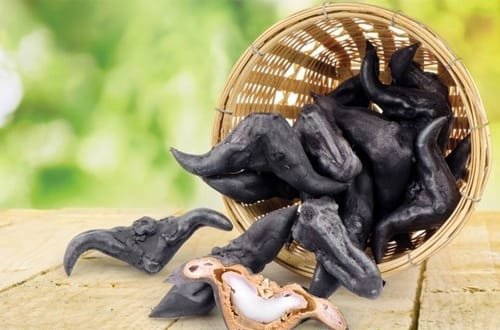
The shell protects the seed and is one reason the fruit can look so intimidating. Unlike an ordinary fruit, you can’t simply bite into it or peel it with your hands.
The fruits are traditionally boiled or steamed before the hard shell is removed. The cooked kernel can then be eaten by itself or incorporated into different dishes.
Are They Really Water Chestnuts?
This is where things can get confusing.
Water caltrops are sometimes called “water chestnuts,” but they are not the same plant as Chinese water chestnuts commonly used in Asian cooking.
Chinese water chestnuts are produced by an aquatic sedge called Eleocharis dulcis, while water caltrops belong to the genus Trapa and produce horned fruits.
They may both have starchy edible portions, but botanically they are completely different.
How Are They Traditionally Used?
Water caltrops have a long culinary history, particularly in parts of South Asia.
In India, varieties commonly known as singhara have traditionally been boiled, peeled, and eaten. The edible portion can also be dried and ground into flour.
That flour is used in various traditional foods, including some dishes prepared during religious fasting periods.
Depending on the region, cooked water caltrops may also be eaten as a snack or added to rice dishes, soups, stir-fries, porridge, sweets, and other recipes.
The exact preparation varies considerably by culture and species.
Why Shouldn’t You Eat Them Raw?
This is probably the most important thing to remember.
Because water caltrops grow in freshwater environments, their surfaces and edible portions can potentially become contaminated with microorganisms or parasites.
One parasite associated with raw or inadequately cooked aquatic plants in some regions is Fasciolopsis buski, an intestinal fluke.
That doesn’t mean every water caltrop is contaminated. However, it does mean you shouldn’t assume that an unfamiliar freshwater plant is safe to eat raw.
Proper cooking is an important food-safety precaution.
If you receive these fruits from someone, first find out where they came from, how they were harvested, and whether they were intended for human consumption.
And if you’re not completely certain about the species, don’t rely solely on a photograph or a random social-media comment for identification.
What Do They Taste Like?
People who eat properly prepared water caltrops often describe the flavor as relatively mild.
The texture is usually more noticeable than the taste. Depending on the species and preparation, the cooked kernel can be:
Firm and starchy
Slightly crunchy
Mildly sweet
Nutty or earthy
Somewhat similar in texture to a chestnut
Because the flavor is mild, the kernels can work well in both simple snacks and more elaborate traditional dishes.
There Is Another Side to These Plants
Water caltrops aren’t just interesting as food.
Some Trapa species have become invasive in certain parts of the world. Under favorable conditions, they can spread rapidly and form dense mats across the surface of waterways.
Those dense growths can interfere with boating, fishing, recreation, light penetration, water movement, and native aquatic plants.
That’s why people should never release unfamiliar water caltrop plants, seeds, or other aquatic plants into natural waterways. Growing them may also be regulated in some locations.
So, What Should You Do With Them?
If you find a bag of these strange fruits, don’t immediately treat them like ordinary fresh produce.
First, confirm their identity.
Then determine where they came from and whether they were harvested or purchased as food.
If they are confirmed to be an edible water caltrop from a reliable source, they can traditionally be washed, thoroughly cooked, allowed to cool, and carefully opened to remove the hard shell.
The pointed projections can be sharp, so they should be handled carefully.
Also avoid fruits showing obvious signs of spoilage, such as mold, slime, strong unpleasant odors, or extensive decay. Cooking does not make spoiled food safe.
Nature Can Be Surprisingly Strange
Perhaps the most fascinating thing about water caltrops is the contrast.
From the outside, they look almost prehistoric — dark, hard, and covered with horns.
Inside, they’re hiding a pale, starchy kernel that has been part of traditional diets for generations.
A food that might look completely unfamiliar to one person can be an ordinary seasonal ingredient to another.
So if you ever see a photograph of these bizarre-looking fruits and wonder what they are, they may be water caltrops from the genus Trapa.
Just remember: identify first, learn where they came from, and cook them properly before eating.
Sometimes the strangest-looking foods in nature have the most interesting stories behind them.