
In December 2020, Alejandro Navarro, a middle school math teacher in Del Rio, Texas, was rushed to the hospital with failing health. His heart was functioning at about 20 percent. His kidneys were badly damaged. Doctors were running tests and asking him, plainly, what he wanted if his heart stopped: CPR and intubation, or to go in peace.
He answered them. Then he went back to his students’ grades.
Navarro taught mathematics at Del Rio Middle School in the San Felipe Del Rio Consolidated Independent School District. Born in Ciudad Acuña, Mexico, he spent decades in the classroom, with a particular focus on students learning English as a second language. Family members said he saw himself in those kids. He was also a pastor at Iglesia Cristo Vive. Teaching, they said, was not a job he clocked out of.
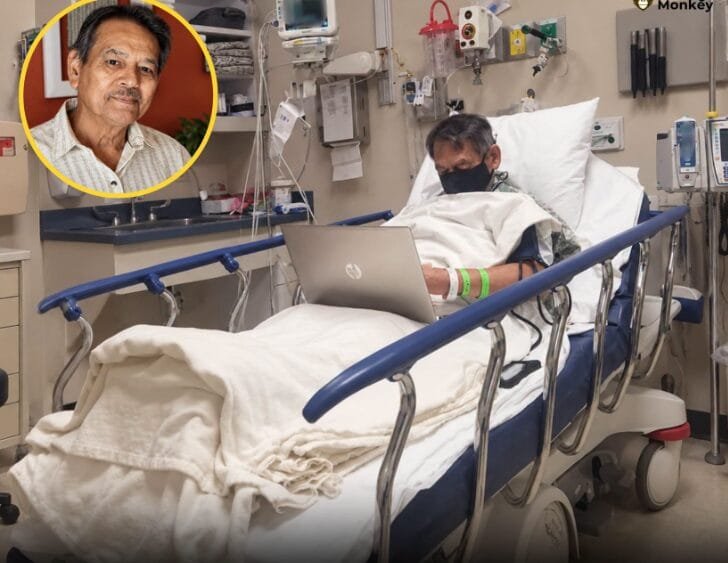
The week before Christmas, his long-standing heart problems worsened. Before leaving for the emergency room, he packed his laptop and charger. He was worried about finishing grades for progress reports. His daughter, Sandra A. Venegas — herself a teacher — later described the scene: doctors coming in, tests, hard conversations about what to do if his heart failed. “He’d answer their questions and resume with grades.”
A photograph of Navarro in a hospital bed, laptop on his lap, circulated widely after Venegas shared it. The image captured a man hooked to medical equipment who still treated unfinished student work as unfinished duty. It drew tens of thousands of reactions as it spread on Facebook and later resurfaced on other platforms. People saw devotion. Others saw a system that never lets teachers stop. Both readings were already in his daughter’s own words.
Venegas wrote that the last time she saw her father at home, he spent the two hours she was there working. She wished she had closed the laptop. “Teachers put in so many extra hours, hours that many don’t realize,” she said. “Even during a pandemic, even during a health crisis, teachers worry about completing their duties.” She asked spouses and children of teachers to help them set boundaries, and she told educators not to treat after-hours work as normal: you are replaceable at work; you are not replaceable at home.
Navarro died the next day. The family made clear the hospitalization was not for COVID-19. He was 66.
The story is not new. It first moved across Texas and Spanish-language news in late December 2020 and has been retold for years because the picture is simple and hard to look away from: a teacher who carried his students into the last hours of his life. Some teachers put the work down when the bell rings. Navarro did not. His family has said that was who he always was.
The grades, by all accounts, got entered. The lesson that traveled farther was the one his daughter tried to leave with the photo: love the vocation, but do not let it take the last two hours you might have had with someone who cannot be replaced.