
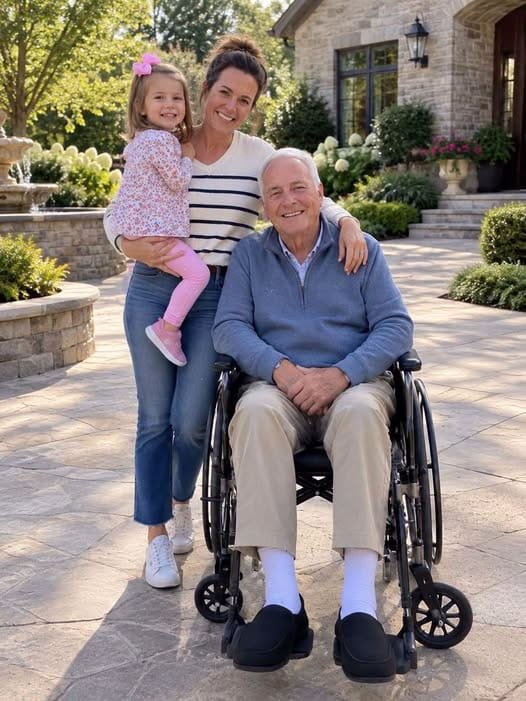
I learned to wait for nothing. Not miracles. Not rescue. Just the next blow. Foster homes taught me that. Cancer confirmed it. By the time I sat on the floor with an eviction notice, a baby, and my dead husband’s debt, “hope” felt like a cruel joke.
So when a seventy-two-year-old stranger offered marriage as a lifeline, I said yes for one reason: survival. I didn’t know that decision would unravel everything I believed about love, debt, and what it meant when someone finally gave you something without conditions.

I did not fall in love with Richard the way movies teach you to recognize love. There was no lightning, no sweeping moment of certainty. There was only a slow, steady hum—the sound of someone who noticed the exact shape of my fear and refused to use it against me.
He never pretended our bargain was anything other than what it was. Yet he kept placing small, unasked-for mercies in my path: an extra blanket on the couch, a repaired stroller wheel, a chessboard set up for a toddler who could barely count the pieces. In those quiet gestures, I discovered a different kind of permanence, one built less on romance than on reliability.
His final letter completed what his life had been teaching me: security could exist without strings, and I could be chosen without having to earn it first.
Sitting in the house he had structured to hold us both, with Emily’s future secured and my own no longer dangling over an edge, I realized he had done what no foster parent, caseworker, or early love had ever managed.
He had made it safe for me to soften.
Safe enough to try reconnecting with Sophie. Safe enough to play chess badly and still stay at the table. Safe enough to believe that love did not have to be another form of captivity.
In the end, Richard’s greatest gift was not the trust, the money, or even the house.
It was the radical, disorienting invitation to believe that love could be designed to feel like freedom instead of a trap.