

The moment I stopped being my family’s dependable daughter happened on my twenty-fifth birthday.
I had spent months saving for a beautiful deep-blue dress, and our family had a dinner reservation at 7:30. But ten minutes before we left, my younger sister Madison started crying because the restaurant had written CLAIRE—my name—on the birthday cake.
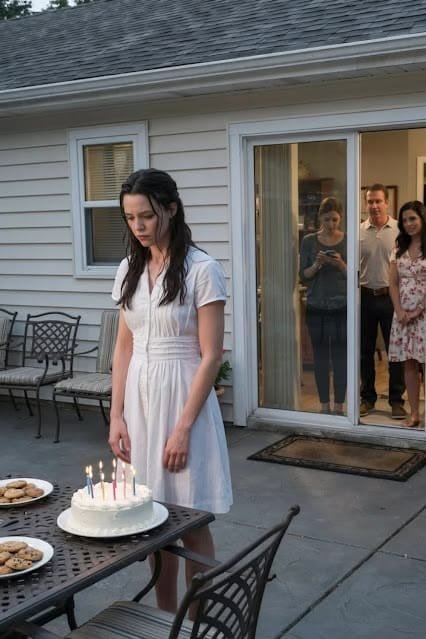
Instead of comforting me, Mom immediately suggested canceling my birthday dinner.
“Madison is feeling overwhelmed.”
Dad agreed.
“It’s only one dinner.”
But it had never been only one dinner.
My high school graduation celebration had become Madison’s dance recital dinner. My college graduation was interrupted because she had a headache.
My first promotion went unnoticed because she had broken up with someone. Even my housewarming became a discussion about Madison’s future.
For years, I had also financially supported my family.
I paid rent, groceries, utilities, car insurance, medical bills, and even Madison’s phone expenses. I told myself that family helped family.
But that night, watching Madison secretly smile beneath her blanket, something inside me finally became clear.
I simply said, “Cancel it.”
Then I went upstairs, packed two suitcases, took my important documents and my emergency savings of $8,740, and quietly left.
By sunrise, I was nearly four hundred miles away.
Then my family started calling.
Dad said the electricity payment had bounced. Mom needed money for groceries. Madison needed her phone bill paid.
For the first time, I realized how dependent they had become on me.
Then a man named Martin Hale called.
He had represented my grandmother, Evelyn.
He told me something that completely changed my life.
On my twenty-fifth birthday, I had legally inherited a family trust worth approximately $640,000, along with ownership of my parents’ house.
I was stunned.
My parents had never told me.
Worse, Martin explained that my father had been using the trust money for years.
The trust was supposed to pay for my education, healthcare, and housing, but hundreds of unauthorized withdrawals had been made.
More than $213,000 had been improperly spent.
Some had gone toward family expenses, but much of it had funded Madison’s lifestyle—her tuition, car, vacations, and other purchases.
My father had even attempted to borrow against the house to buy Madison a condominium.
Suddenly, I understood why Madison had panicked about my birthday.
She knew my twenty-fifth birthday meant the money would finally become mine.
Then I learned something even worse.
The legal documents meant to notify me about the trust had been thrown away.
Madison admitted she had destroyed the letter because she knew it would “ruin everything.”
The cake incident suddenly made sense.
It wasn’t really about the cake.
It was about what my birthday represented.
I hired my own attorney and a forensic accountant. My parents were eventually forced to leave the house, sell the vehicle purchased with trust money, and repay what they had improperly taken.
But then Martin discovered one final secret.
My grandmother had left me a sealed letter.
Inside, she revealed that my parents were not my biological parents.
I had been adopted as a baby.
My biological mother was actually my grandmother’s daughter, Rebecca, who had died in a car accident when I was only eleven months old.
The money and house had originally come from Rebecca’s inheritance and life-insurance settlement.
My parents had hidden the truth from me for twenty-five years.
I looked at them and finally understood why I had spent my entire childhood trying so hard to earn their love.
I had believed being strong meant carrying everyone else.
Grandma’s final words changed that:
“Strength is also knowing when to put the burden down.”
Six months later, I sold the family house and bought a small home near the mountains.
On my twenty-sixth birthday, I wore the same blue dress I had worn the year before.
This time, there were no canceled plans, no family emergencies, and no one demanding that I sacrifice my happiness.
There was only a simple chocolate cake.
Across the top was one word:
CLAIRE.
I laughed.
My name on a birthday cake had never destroyed my family.
It had simply revealed what had been broken all along—and finally reminded me that my life, my money, my identity, and my happiness belonged to me.