

Donald Trump has said that he is open to changing the law on cannabis after a previously undocumented side effect was discovered.
The US currently has a patchwork of different legal tolerances around the use of the drug, with precise rules varying by state. There are clear distinctions about whether the drug is being used recreationally or prescribed medically.
Cannabis can be prescribed for several uses such as chronic pain relief, where it is generally considered less risky than opioids, as well as in managing health conditions such as Multiple Sclerosis or relieve the side effects of chemotherapy…
However, legally there is a big difference in the US between medical use and recreational use, and for recreational use, it varies a lot by state, with some legalizing possession of a relatively small amount, though many also have laws around where it can be consumed.
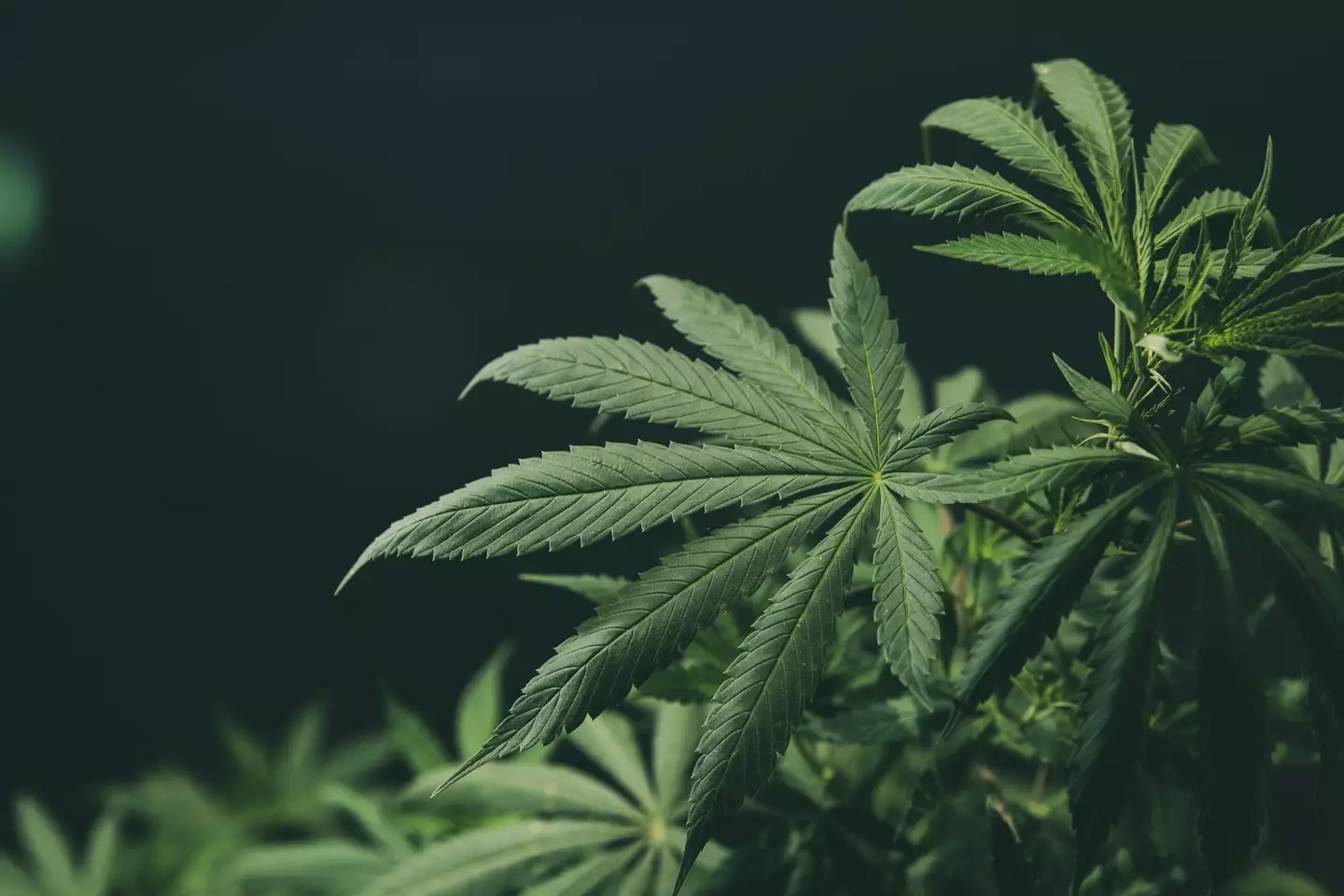
Cannabis is federally illegal but some states have introduced exemptions (massimo colombo/Getty)
Now, Trump has indicated that he wants to revisit the law around cannabis in the US, though he made one admission about the issue. At a press conference earlier this year, the POTUS suggested that his administration may revisit the classification of cannabis.
He said: “We’re looking at reclassification, and we’ll make a determination over the next – I would say, over the next few weeks, and that determination hopefully will be the right one.”
In a remark which is perhaps surprising for a president known for his sweeping statements, Trump said: “It’s a very complicated subject.”
He added: “I’ve heard great things having to do with medical and bad things having to do with just about everything else.”
Cannabis is illegal on in the US on the federal level as a Schedule I under the Controlled Substances Act of 1970. However, states have been able to introduce ‘exemptions’ to this for certain circumstances.
Many jurisdictions have a medical exemption, for example, but others such as California have gone further with exemptions for possessing smaller amounts for personal recreational use.
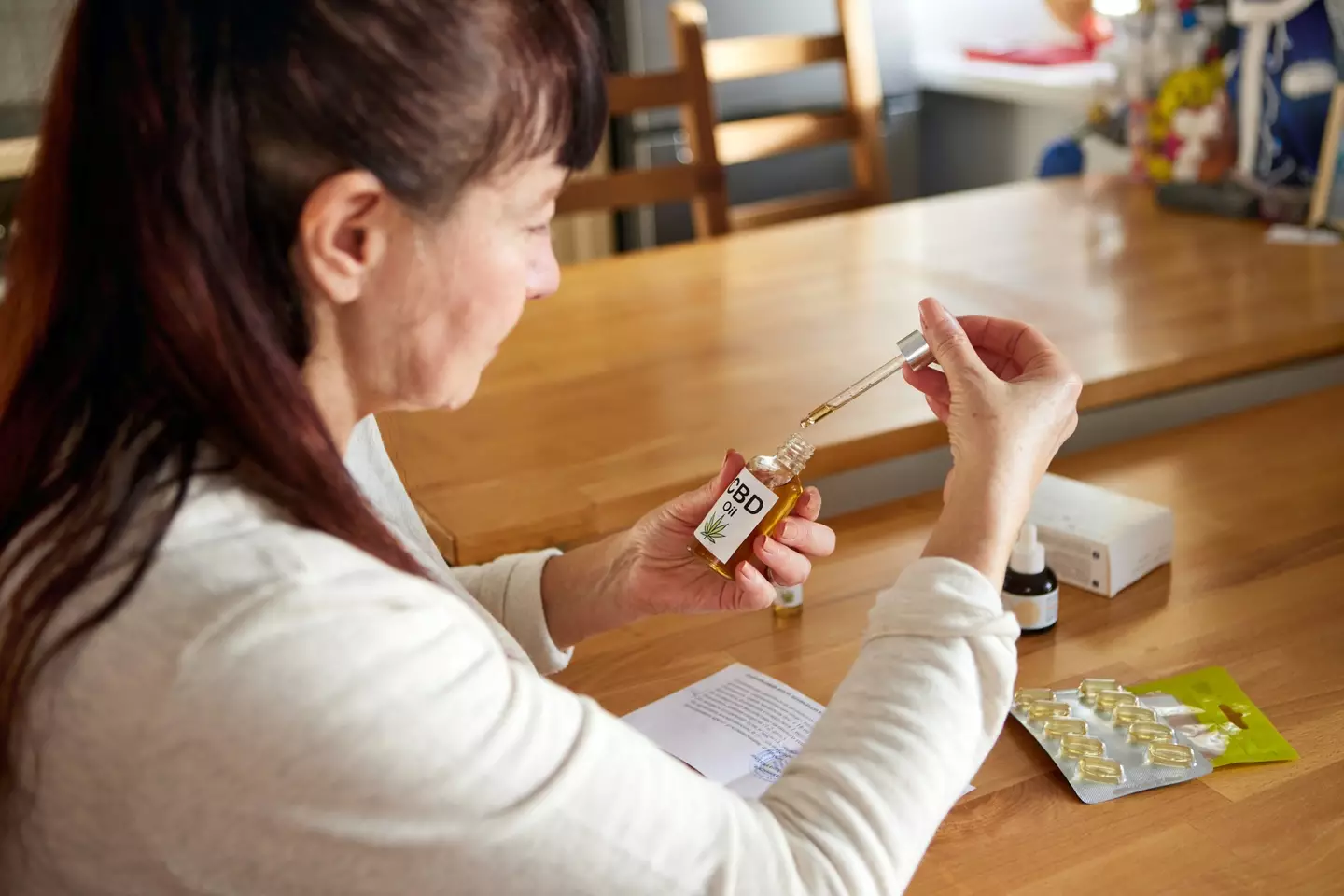
Cannabis is prescribed for several medical conditions (Ekaterina Demidova/Getty)
Trump’s comments have re-emerged after previously unknown side-effects for regular and long-term users of cannabis were identified by scientists.
This has been called cannabis hyperemesis syndrome (CHS), and can trigger symptoms like nausea.
Emergency medicine specialist, Dr. Chris Buresh, said: “Some people say they’ve used cannabis without a problem for decades. Or they smoke pot because they think it treats their nausea.
“It seems like there’s a threshold when people can become vulnerable to this condition, and that threshold is different for everyone. Even using in small amounts can make these people start throwing up.”
New study reveals major flaw with Trump’s ‘tariff dividends’ of ‘at least $2,000’ as simple criteria and expected payout date announced
Treasury Secretary Scott Bessent previously explained the possible criteria for the payouts
A new study has shockingly thrown President Donald Trump’s $2,000 ‘tariff dividends’ into question, which could mean people are left empty-handed.
After his controversial tariffs were lodged against US companies who want to import products from abroad, Trump revealed that the money that they were making thanks to the new tax, would be taken out as a dividend to split between the American public.
“We’ve taken in hundreds of billions of dollars in tariff money. We’re going to be issuing dividends,” Trump said this month, claiming it could be paid out as soon as ‘the middle of next year, a little bit later than that’.
The president said the payments would be given to those on ‘low, moderate and middle incomes’, but the criteria was not specified.

Trump has promised $2,000 tariff dividends to some Americans (Pete Marovich/Getty Images)
Treasury Secretary Scott Bessent did, however, reveal to Fox News that Trump would need to pass legislation through Congress to approve the significant spending needs.
He added that the payout ‘would be for families making less than, say, $100,000′.
But even those people might not get the checks after a new study revealed that the cost to distribute the money to those who need it would surpass the amount the Treasury has to give.
The new report – titled ‘Tariff Dividends Would Cost More than Tariff Revenues Will Generate’ – was published on November 18 by the US Tax Foundation.
It proposes three different tariff dividend models, concluding there was never a way to distribute $2,000 equally to those who need it, without increasing the federal budget deficit.
Here’s the models it proposed:
- Option 1: $2,000 per person payments that have a hard cutoff of $100,000 for all tax filers – $279.8 billion
- Option 2: $2,000 per person payments that begin phasing out at a 5 percent rate above $100,000 for all tax filers – $320.9 billion
- Option 3: $2,000 per person payments that begin phasing out at a 5 percent rate above $150,000 for joint filers, $112,500 for head of household filers, and $75,000 for single filers – $347.6 billion
They then assessed how much it would cost if the dividends were also paid to tax filers’ dependents and non-filers, which pushed costs up to $606.8 billion for option 3.

Donald Trump plans to hand out $2000 to low income families (MargJohnsonVA/ Getty Stock)
The Committee for a Responsible Federal Budget also calculated that it could cost around $600 billion a year to administer the handout.
However, the Tax Federation revealed Trump’s new tariffs will ‘generate $158.4 billion in total revenue during 2025 and another $207.5 billion in 2026′.
If Trump was hoping to pay the dividends based on 2025 tariff revenues alone, he’s $120 billion short for even the least generous tariff dividends model.
“Most designs would absorb all the revenue generated so far, and most or all that will be generated in the next calendar year,” the Tax Foundation stated
“Under nearly any design option, sending out $2,000 payments to Americans would increase, not decrease, the federal budget deficit.
“A better way to provide relief from the burden of tariffs would be to eliminate the tariffs.”
UNILAD has contacted the White House for comment
Trump’s ‘immigration freeze’ explained as 19 countries affected and White House prepare to expand travel ban
The White House’s latest actions come after the fatal shooting in Washington, D.C. last week
If you’ve been keeping up with the news this week you’ll have heard about Donald Trump’s controversial immigration freeze.
On Tuesday (December 2), the president announced that people from 19 countries will have their immigration requests frozen with immediate effect, saying he would ‘permanently pause migration from all third world countries’.
The US Citizenship and Immigration Services (USCIS) proceeded to send out a memo to its staff telling officers to cease making final decisions on all immigration applications from those countries. These decisions include green cards, work permits, and citizenship applications.
The 19 affected countries are: Afghanistan, Burma (Myanmar), Burundi, Chad, the Republic of the Congo, Cuba, Equatorial Guinea, Eritrea, Haiti, Iran, Laos, Libya, Sierra Leone, Somalia, Sudan, Togo, Turkmenistan, Venezuela and Yemen.
Why has the freeze been brought in?

Trump has recently announced an 19-country wide immigration freeze (ANDREW CABALLERO-REYNOLDS / AFP via Getty Images)
On November 26 a man shot two National Guards just blocks away from the White House. Tragically one guard has since succumbed to her injuries and died while the other officer is still in hospital.
Rahmanullah Lakanwal, a 29-year-old man from Afghanistan, has been identified as the prime suspect and is now facing murder and assault charges, which he’s pleaded not guilty to.
Lakanwal legally came into the US in 2021 under the Biden administration’s ‘Operation Allies Welcome’ scheme.
Shortly after the attack, the USCIS announced that it was suspending all Afghan asylum and immigration claims ‘effective immediately’. This suspension has since expanded to an additional 18 countries.
How the freeze affects immigrants already in the US

Rahmanullah Lakanwal has been named as the suspect in the Washington DC attack (FBI)
According to IAS Immigration Law, a UK-based immigration advice service, green hard holders in the US will not automatically lose their permanent residence but their cases could be up for further review.
“If officials suspect there may be security or eligibility issues, some individuals may be asked to return for additional interviews or provide more documentation,” it adds.
In regards to those who are close to getting their citizenship, the freeze could prolong the application process. It’s been reported that interviews and oath ceremonies have been canceled for citizens from the 19 named countries.
What people trying to come to the US should expect

The freeze will cause processing delays for those wanting to come into America (Getty Stock)
Those trying to come into the US from the named 19 countries should expect longer processing times, more thorough reviews, and possible appointment cancelations.
It added that while Trump has considerable legal power in halting the immigration process for people not currently in the US, courts are more likely to challenge his attempts to halt citizenship proceedings for people already in the country.
ISA Immigration Law further warned: “The situation is changing quickly, so anyone with an application pending or planning to apply to one of the listed countries should obtain current, personalized legal advice instead of relying on past practices or timelines.”
Niamh Shackleton
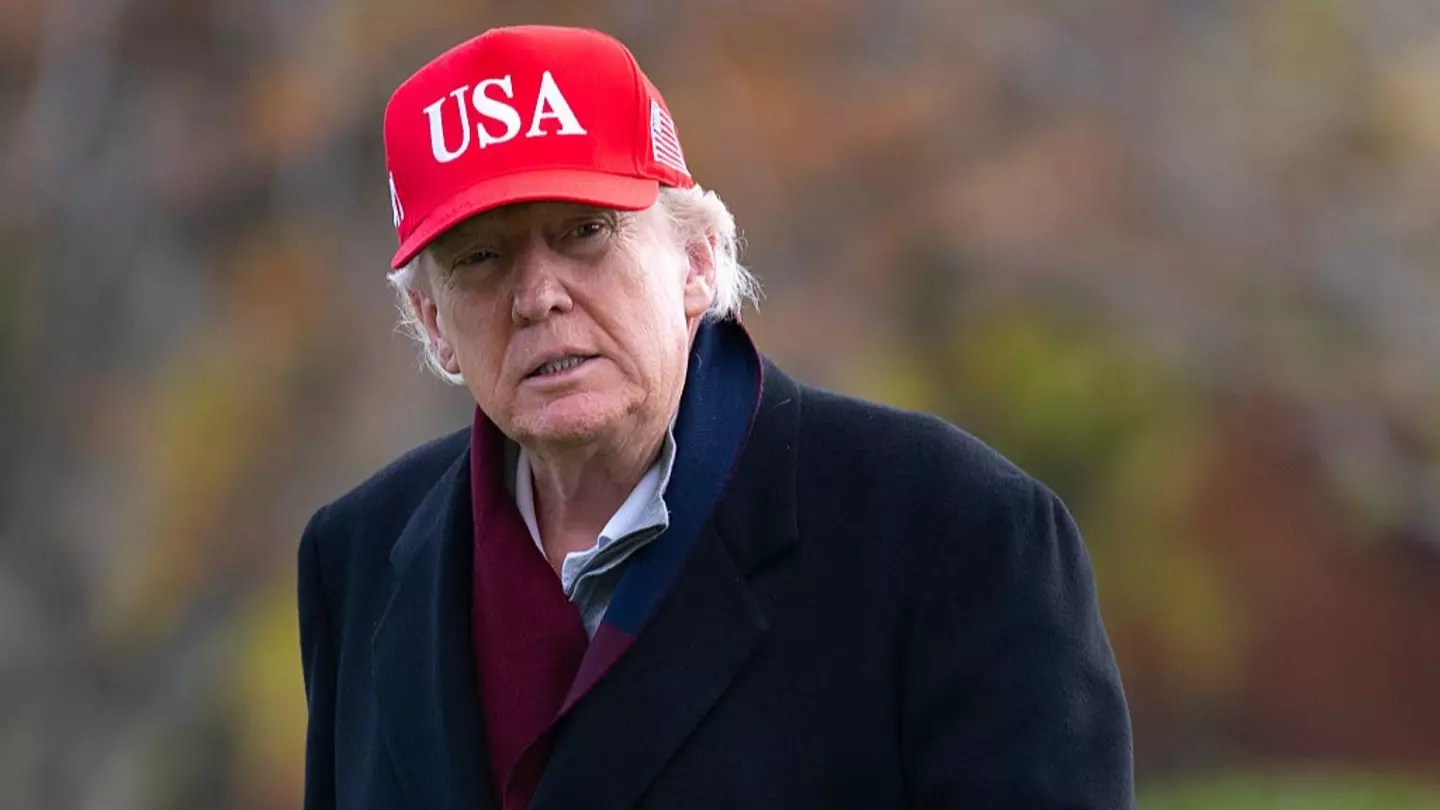
Trump’s third world migration ban explained after National Guard shooting suspect identified
It’s not the first time Trump’s threatened a travel ban
Donald Trump has threatened to ‘permanently pause’ all migration from third world countries to the US.
In a Thanksgiving message via Truth Social, the President lay out his plans to further crack down on migration.
It comes as the suspect of November 26 National Guard shooting in Washington, D.C. was identified as 29-year-old Afghan, Rahmanullah Lakanwal.
Sarah Beckstrom, 20, part of the West Virginia guard, died after being shot, while Andrew Wolfe, 24, remains in critical condition, Sky News reports.
Lakanwal was taken into custody after being apprehended by law enforcement yesterday. He’s said to have sustained gunshot wounds and was taken to hospital for treatment. The injuries were reportedly non-life threatening.
Two law enforcement officials told the Associated Press that Lakanwal is believed to have come to the US in September 2021 and has been living in Washington state.

The shooting took place near the White House on November 26 (Anna Moneymaker/Getty Images)
A relative of the suspect told NBC News that the 29-year-old had served in the army for 10 years and served alongside US troops. The relative, who allegedly served alongside Lakanwal, said of their time in the military: “We were the ones that were targeted by the Taliban in Afghanistan.”
Which third world countries is Trump banning?
In his Truth Social post, Trump didn’t explicitly detail which third world countries he’d ‘permanently’ be pausing migration on, nor did he state exactly when this freeze would come into place.
As per the Borgen project, the term ‘third world’ first originated during the Cold War and was used to describe nations that did not align with either of the two major power blocs: The US and NATO (first world) or the Soviet Union (second world).
These non-aligned countries were mostly located in Africa, Asia, and Latin America. So the third world definition was political, not economic – meaning it included both wealthy and poor nations. Today, ‘third world country’ is often used to describe economically poor or developing nations, which doesn’t actually match the original Cold War definition.
Trump’s previous travel and migration bans
Of course, this isn’t Trump’s first rodeo when it comes to banning people from certain countries from entering the US.
In January 2017, Trump signed Executive Order 13769, dubbed the ‘Muslim travel ban,’ which temporarily barred entry to the US for citizens from seven majority-Muslim countries, including Syria, Iran, Iraq, Libya, Somalia, Sudan, and Yemen.
Refugee admissions were halted for 120 days, and indefinitely for Syrian refugee resettlement.

Trump has previously enforced two major travel bans (Roberto Schmidt/Getty Images)
After court challenges, that order was replaced in March 2017 with Executive Order 13780, which narrowed the restrictions; removing Iraq, exempting valid visa or green-card holders and suspending refugee admissions.
Earlier in 2025, Trump reinstated and expanded a travel ban via Proclamation 10949, effective June 9.
This ban fully restricts entry for citizens from 12 countries – including Afghanistan, Iran, Libya, Somalia, Sudan, Yemen, Myanmar, Chad, Congo, Equatorial Guinea, Eritrea, and Haiti – and imposes partial restrictions on seven more.
Unlike the 2017 ban, the 2025 measure is broader in scope and doesn’t come with a built-in expiration or refugee-resettlement pause date.