
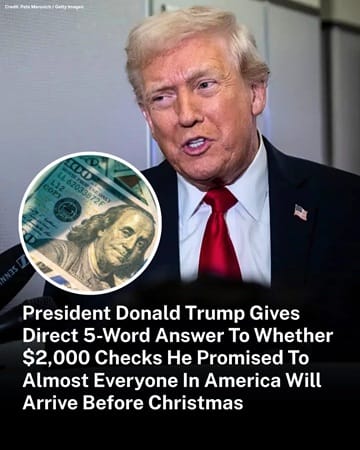
Former President Donald Trump has once again sparked public conversation around economic relief by proposing a so-called “tariff dividend” — a one-time cash payment of $2,000 aimed at what he describes as “moderate-income earners.”
While still conceptual, the idea has captured attention as an unusual form of redistributing government revenue, distinguishing itself from traditional stimulus checks funded through federal spending.
Trump has framed the proposal as a method to give Americans a tangible return on government income collected through import tariffs, while simultaneously avoiding a significant increase in the national debt.
In a recent statement, he said: “We’ve taken in hundreds of millions of dollars in tariff money. Part of that will go to paying down our national debt, and part of it — in the form of dividends — will go to individuals of moderate income. We’re talking thousands of dollars per household.”
However, he stressed that the payments are not imminent.

Families hoping for extra cash in 2025 should temper their expectations, as Trump confirmed no payments would arrive before 2026, likely coinciding with political timelines, including the midterm elections.
How the Tariff Dividend Would Work
Unlike traditional stimulus checks funded through general federal spending, this proposed tariff dividend would derive directly from federal revenue collected on imported goods.
Conceptually, this allows the government to “return” a portion of tariff income to taxpayers rather than increasing borrowing or inflating the national debt.
Yet, economists remain cautious about the proposal’s practicality.
Tax Foundation senior economist Erica York explained that if eligibility were capped at households earning $100,000 or less, roughly 150 million adults could qualify — bringing total payments close to $300 billion.
For comparison, as of September 2025, total federal tariff collections stood at roughly $195 billion, significantly short of the amount required to fund a $2,000 payment to all eligible Americans.
Some policymakers have suggested basing payments on projected future revenue, citing Treasury forecasts of roughly $3 trillion in tariff income over the next decade.
However, such projections are inherently uncertain.
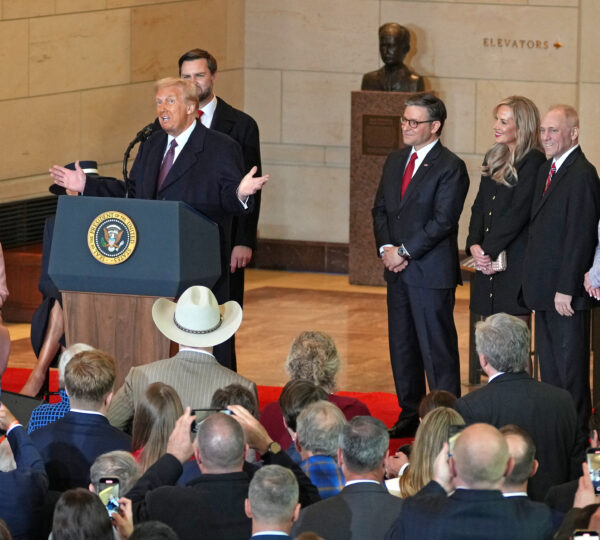
Trade tensions, global market fluctuations, and unexpected economic events could reduce actual revenue, raising questions about the feasibility of funding a widespread cash dividend solely from tariffs.
Historical Context: Tariffs as Policy Tools
Tariffs have long played a dual role in U.S. history: as a source of revenue and as a tool to protect domestic industries.
In the 19th century, before the federal income tax existed, tariffs were the primary source of government funding.
More recently, tariffs have been used to influence trade policy, discourage imports, and create leverage in international negotiations.
The idea of a “tariff dividend” is unusual in modern American policy, as past tariffs have rarely been redistributed directly to citizens.
The closest historical parallels include indirect benefits, such as subsidies for domestic producers or temporary reductions in import taxes.
The concept now proposed would attempt to make tariff revenue visible to individual taxpayers, turning a macroeconomic tool into a personal cash benefit.
Who Could Qualify
Trump has indicated that the payments would focus on middle- and lower-income households while excluding higher earners.
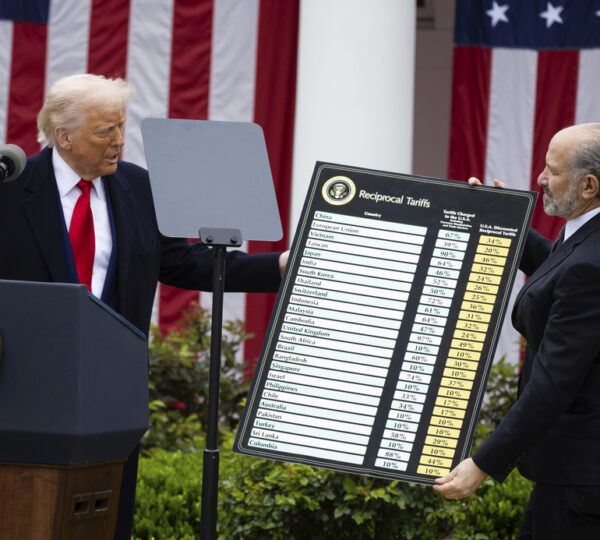
While no formal eligibility criteria have been established, analysts have suggested approximate income ranges:
- Lower-income households: under $55,820 annually
- Middle-income households: $55,820–$167,460 annually
- High-income households: above $167,460 annually
These figures are influenced by household size, regional cost of living, and other socio-economic factors.
Past stimulus measures, such as the pandemic-era payments, phased out at $75,000 for individuals and $150,000 for joint filers, suggesting that similar thresholds might apply here.
Additionally, household composition would likely play a role. Larger families could see adjusted payments depending on the number of dependents.
Designing a fair and efficient formula could be complex, as it would need to balance household size, income thresholds, and the total funds available from tariffs.
Economic and Fiscal Implications
While the idea of returning tariff revenue to taxpayers may seem appealing, experts caution that it comes with economic trade-offs:
- Inflationary Pressure: Direct payments could increase consumer spending, potentially driving prices higher in the short term.
- Trade Relations: Higher tariffs may provoke retaliation from trading partners, possibly reducing exports and increasing costs for U.S. consumers.
- Budgetary Risk: Funding a $2,000 payment for millions of Americans could require adjustments in other federal programs if tariff revenue falls short.
Economists note that while a tariff dividend could theoretically be a “self-financed stimulus,” real-world complexities — such as fluctuating tariff income and international trade reactions — make outcomes unpredictable.
Political Considerations
The proposal is not purely economic; it is also political.
Aligning the potential payments with the 2026 midterms suggests a strategy to appeal to voters while sparking public debate on economic policy.
Online reactions have been mixed: supporters praise the idea as a reward for hardworking Americans, while critics question its feasibility and potential side effects, particularly inflation.
Even if implemented, the distribution may be phased or scaled.
Analysts warn that the $2,000 figure may not cover all eligible households as initially suggested, leaving uncertainty about how meaningful the dividend would be in practice.
Comparisons to Past Stimulus Programs
For context, prior federal stimulus programs offer useful benchmarks:
- 2008–2009 Financial Crisis: Tax rebates of $300–$600 per adult aimed to boost consumption.
- 2020 Pandemic Stimulus: Payments ranged from $1,200 to $3,600 per household depending on family size and income, funded through federal debt.
Unlike these programs, a tariff dividend would attempt to fund relief without borrowing, representing a novel fiscal experiment in U.S. policy.
Conclusion: An Idea, Not Yet Reality
At this stage, the so-called tariff dividend remains conceptual — a combination of populist appeal and economic experimentation.
It highlights the tension between campaign promises, fiscal reality, and the challenge of balancing relief with sustainable government policy.

For now, Americans should recognize one clear fact: no payments will arrive in 2025.
Any future rollout depends on congressional approval, Treasury planning, and actual tariff revenue.
The proposal serves as a reminder that economic policy is a balancing act — between debt reduction, taxpayer relief, and trade dynamics — and that ideas, even when appealing, require careful design, oversight, and legislative approval before they can become reality.