
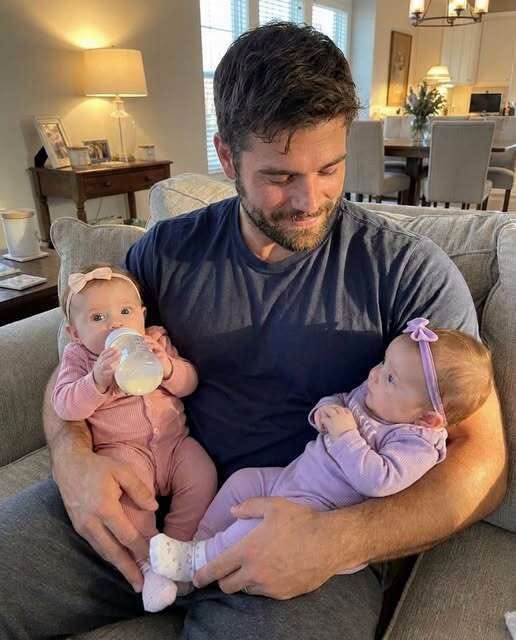
“Tom, do you think I stayed away because I blame you?” my mother-in-law, Joan, asked, standing at my door with a trembling white envelope. Three months earlier, my wife, Mary, had died giving birth to our twin daughters. When doctors warned they might not save all three of them, I followed Mary’s wishes and said, “Save the babies.” Since then, I had lived with the guilt, believing I might somehow have failed her.
Mary and I had dreamed of becoming parents for years. During her difficult pregnancy, she chose names for our daughters, June and Ellie, and imagined the lives they would lead. But when complications arose during delivery, everything changed. By morning, Mary was gone, leaving me with two newborns and a grief I could barely endure.

For ninety days, Joan barely spoke to me. Whenever I sent photographs of the girls, she replied, “Thank you.” I assumed she blamed me for Mary’s death. Alone with two babies, I struggled through sleepless nights, wondering whether different words in that hospital room might have saved my wife.
That morning, Joan finally explained her silence. When Mary was eight, her father died, and Joan became so consumed by grief that she emotionally withdrew from her daughter. One night, Mary asked whether her mother wished her father were alive more than she wanted her own child. Joan couldn’t answer. Mary grew up believing her presence was a burden whenever someone she loved was hurting.

Before giving birth, Mary had asked Joan to promise that if anything happened to her, she would stay close to her daughters. Yet after Mary died, Joan feared that seeing the babies would make her wish her daughter were alive instead. Ashamed of that possibility, she avoided them, repeating the same painful mistake she had made decades earlier.
Then Joan handed me Mary’s letter. In it, my wife explained that she never wanted our daughters to believe they had cost me my happiness. She remembered asking me during pregnancy whether I would regret having them if she died. I had answered, “I’ll miss you every day, but I’ll still love our daughters every day.” She had trusted that answer and begged me never to blame myself for respecting her wishes.

Reading those words shattered the guilt I had carried. I still missed Mary terribly, but I finally understood that loving our daughters didn’t mean choosing against their mother. When Joan asked whether she could hold June, I hesitated, then placed my daughter in her arms. Joan began to cry, promising to earn our trust by staying.
From that day forward, she returned with groceries, helped care for the twins, and shared stories about Mary’s childhood. I began telling June and Ellie about their mother, her laughter, her favorite songs, and how deeply she had wanted them. Mary was gone, but her love remained in the life we shared. And I made myself one promise: my daughters would never have to wonder whether they were wanted.