
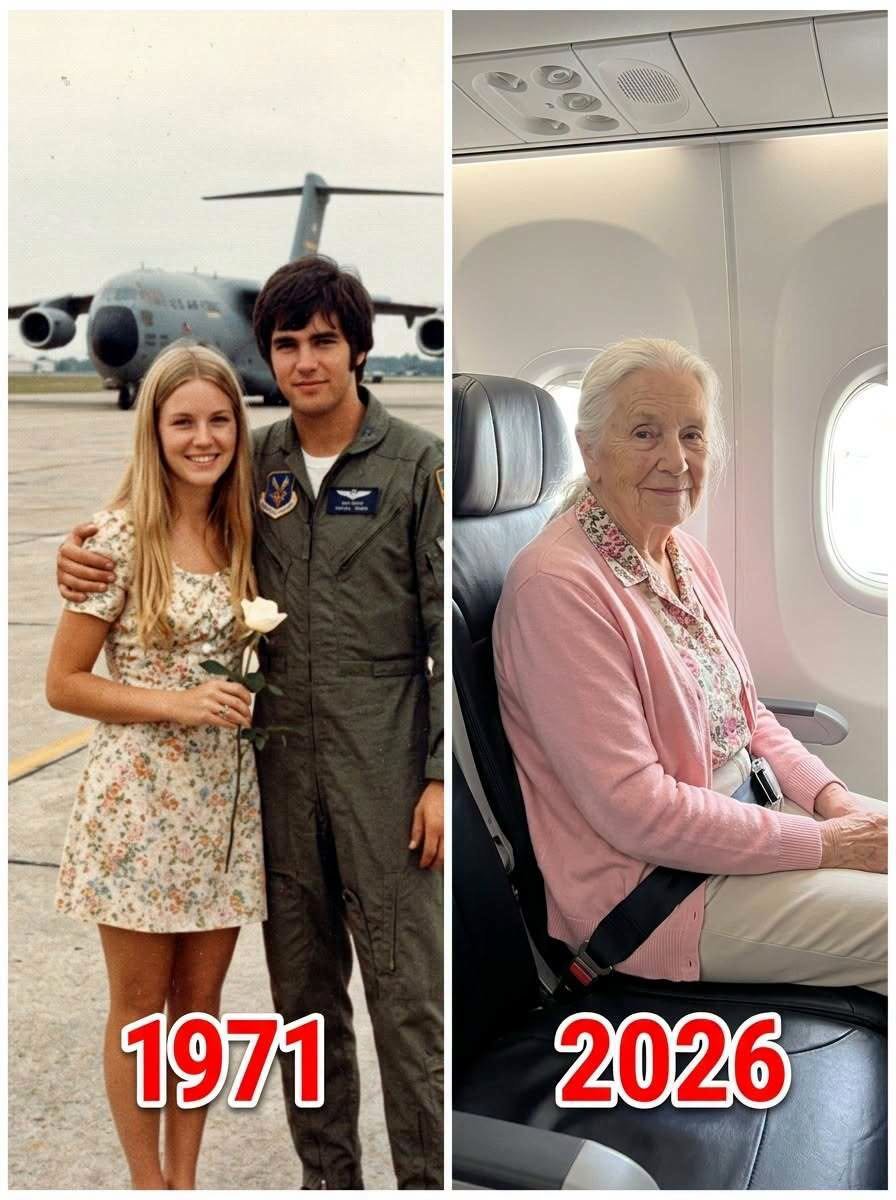
I was twenty-one when my college sweetheart, Thomas, disappeared during the Vietnam War. I was seventy-six when a stranger approached me at the airport holding an old photograph of us. “My grandfather asked me to find you,” he said. “His name is Thomas, and he’s alive.”
Thomas and I had fallen in love in college. He was an engineering student who teased me for studying literature, and I joked that engineers made terrible boyfriends. We planned to marry after graduation. Before he deployed, he promised, “I’ll buy you a proper engagement ring when I get back.” Six months later, military officers informed me that his aircraft had disappeared. No body was found, and his status remained missing in action.
For decades, I waited for news. I never married, although I built a fulfilling life as an English teacher. Every year on Thomas’s birthday, I visited a memorial for missing servicemen and placed a white rose there. I always brought our college photograph and told him about my life. I never stopped wondering whether he might somehow return.
Then, at the airport, his grandson Daniel told me the impossible truth. Thomas had survived, been captured, and eventually returned home in 1973. He had married a nurse named Margaret, raised two children, and lived for decades. Now elderly and seriously ill, he wanted to see me again. I couldn’t understand how he could have come home without contacting me.
Daniel drove me to his grandfather’s house. Thomas sat beside the window, his white hair thin and his hands trembling. When he said my name, I recognized his eyes immediately. But I remained standing. “You’ve been home for more than fifty years,” I said. “Why did you let me believe you were dead?”
Thomas admitted he had been ashamed. He had fallen in love with Margaret while recovering from the war and decided to build a new life. Rather than face me, he postponed contacting me until the silence became unbearable to break. Worse, he had told his parents that I knew he was alive and had asked him not to contact me. They believed his lie and never reached out.
His children were horrified when they learned the truth. Thomas begged me for another chance, explaining that he wanted to make peace before his remaining time ran out. For a moment, I remembered the young man who shared his coffee with me and promised to come home. Then I remembered fifty-five years of waiting.
“No,” I told him gently. “I loved you once, but you let me mourn you while you lived your life. I can forgive the past without pretending it didn’t happen.” I left without promising another visit.
That afternoon, I returned to the memorial and placed my white rose at its base. For the first time, I kept our photograph in my purse instead of leaving it behind. I had honored my promise long enough. When my sister asked what I wanted to do next, I smiled and said, “I want to see the ocean.” At seventy-six, I finally understood that remembering someone doesn’t mean you must keep waiting for them.